Posts

Image
                                                TALIBAN MARCH TO KABUL AND BEYOND - PART I   “Unless US reverses its decision to withdraw from Afghanistan, the latter will collapse to the dynamics of China-Iran-Pakistan alliance.” – Veteran Col RS Sidhu,  August 2020 , ‘Geostrategic Portends in Asia’. https://valleysandvalour.blogspot.com/2020/08/geostrategic-portends-in-asia-2020-2025.html   A Brutally Frank Appraisal US President Biden was brutally frank in providing the rationale for pulling out US forces from Afghanistan, that the US had intervened to safeguard the US mainland from terrorist threats emanating from Afghanistan soil, and not to strengthen Afghanistan as a nation!  The decision to withdraw US forces from Afghanistan had already been announced during the Presidency of Donald Trump. Thus it has bipartisan support in th...
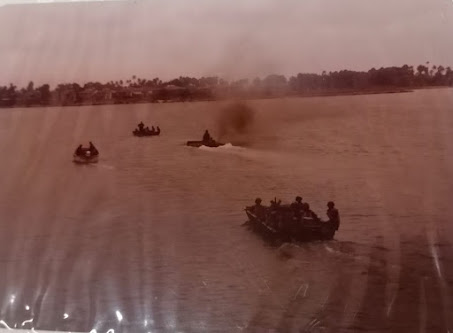
  OVERCOMING INITIAL MILITARY CHALLENGES BY INDIAN PEACEKEEPING FORCE (IPKF) IN SRI LANKA: JULY - SEPTEMBER 1987   Backdrop to Military Operations by IPKF IPKF military operations cannot be looked at in isolation from the Indo Sri Lanka Accord of 29 July 1987, which is inherently flawed from India’s standpoint. Serious practitioners of geopolitics will always wonder as to how India, which vigorously pushed its way to get the Accord signed and implemented, failed to safeguard its own geopolitical interests.   Sri Lanka was able to secure the acceptance by all parties that its unity, sovereignty, and territorial integrity shall remain inviolate. Within the constraints of its own interests, India did negotiate the best possible deal for Sri Lanka Tamils within the framework of Constitution of Sri Lanka. However India failed to secure its own interests. By committing to the Indian military intervention being incumbent on request of Government of Sri Lanka, it ende...
  OPERATION PAWAN  AND THE AFTERMATH  OF THE INDO SRI LANKA ACCORD JULY 1987 https://www.financialexpress.com/defence/operation-pawan-and-the-aftermath-of-the-indo-sri-lanka-accord-july-1987/2298558/     Backdrop Well nigh 44 years have elapsed since the signing of the Indo Sri Lanka Accord of 29 July 1987 plunging the armed forces of India headlong into launching Operation PAWAN in Sri Lanka, the first overseas peacekeeping operation under Indian flag post-independence. The Accord was signed between India and Sri Lanka, two sovereign powers, and an implied but reluctant assent of a non-state organisation the Liberation Tigers of Tamil Eelam (LTTE), the self-appointed sole custodians of ethnic Tamils of Sri Lanka. Four decades down the line, provides adequate historical perspective to study and assess the losses and gains of the three main proponents of the Accord. In this brief we shall look at the Accord per se and the play off from the Accord from t...
Image
                        CRITIQUE OF THE JULY 1987 INDO – SRI LANKA ACCORD   THE ACCORD Broadly the accord required Sri Lanka to undertake specific constitutional measures to end discrimination against its Tamil minority and cease military operations in Northern and Eastern provinces, Tamil rebels to forego violence and surrender their weapons to the Government, and India to act as a guarantor for actions of both the Sri Lanka government and the Tamil groups in terms of the accord and to employ force, if needed. Key Political Provisions that the Accord Proposed to Execute An interim merger of the Tamil predominant Northern and Eastern Provinces into a single administrative unit within three months of signing of the accord and holding of elections, in the presence of Indian observers, to the Provincial Council by 31 December 1987. The final outcome of the merger will be subject to a referendum in Eastern Province to be held ...